Glückauf!
black-tech.de
black-tech.de
| DE | EN |
Duisburg's Four-Section Tramcar -
GT 10 NC-DU
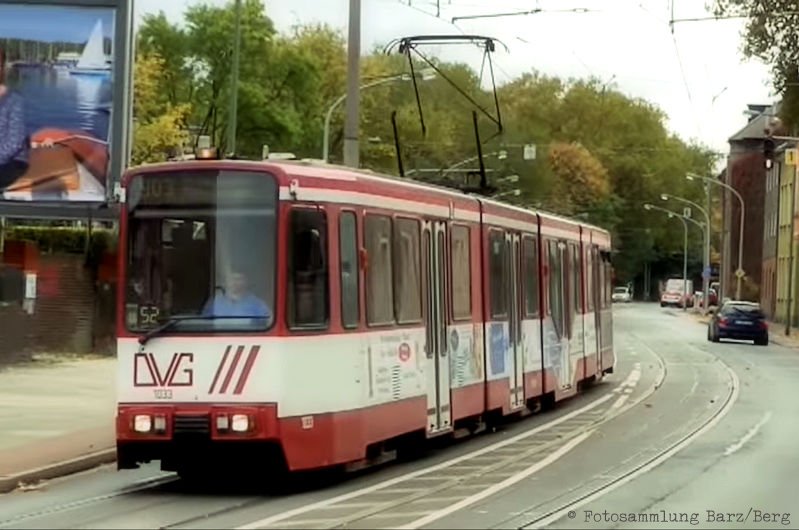
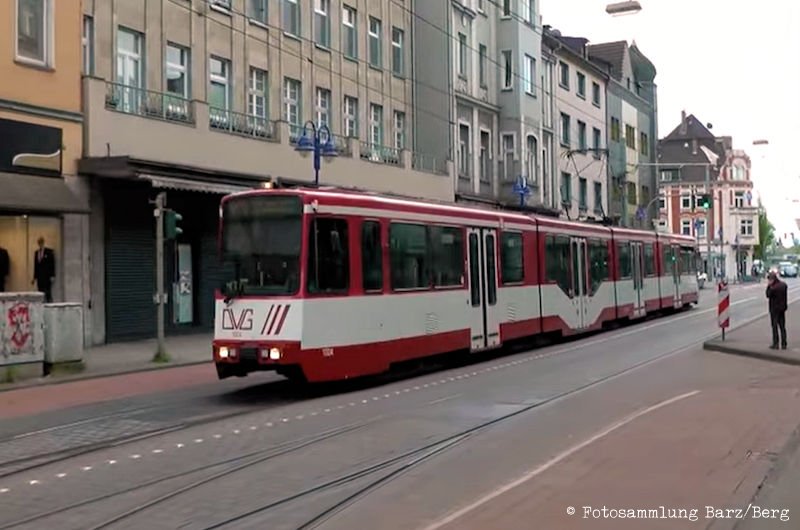
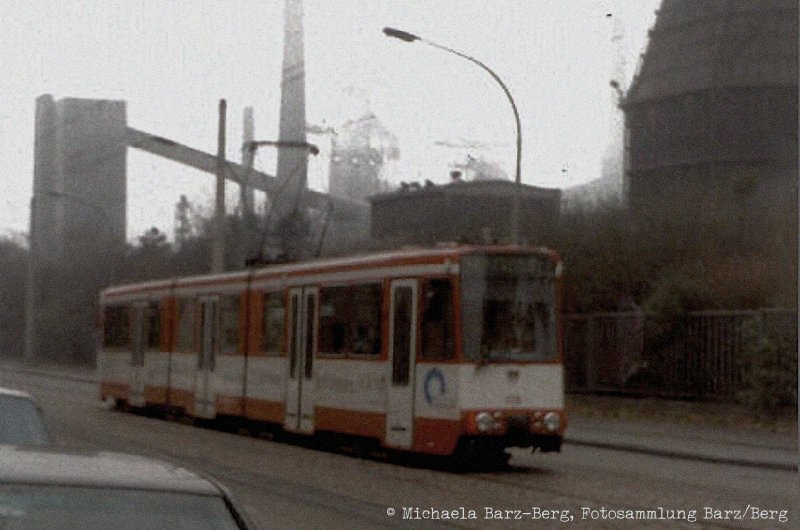
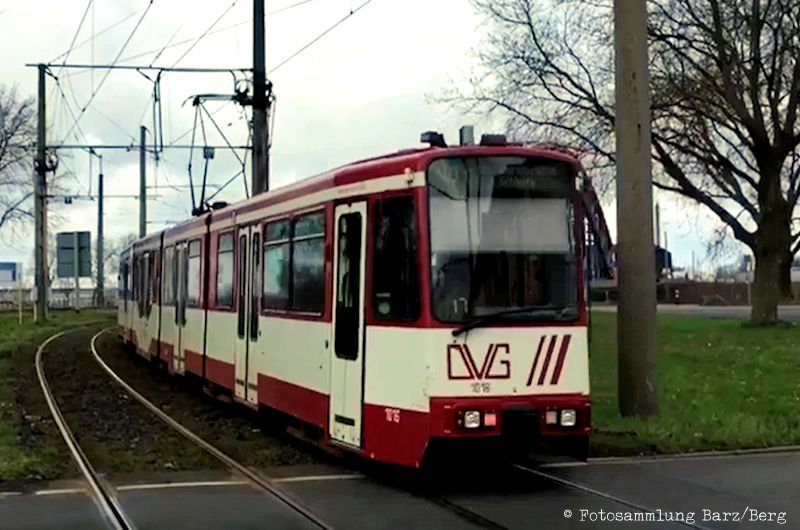
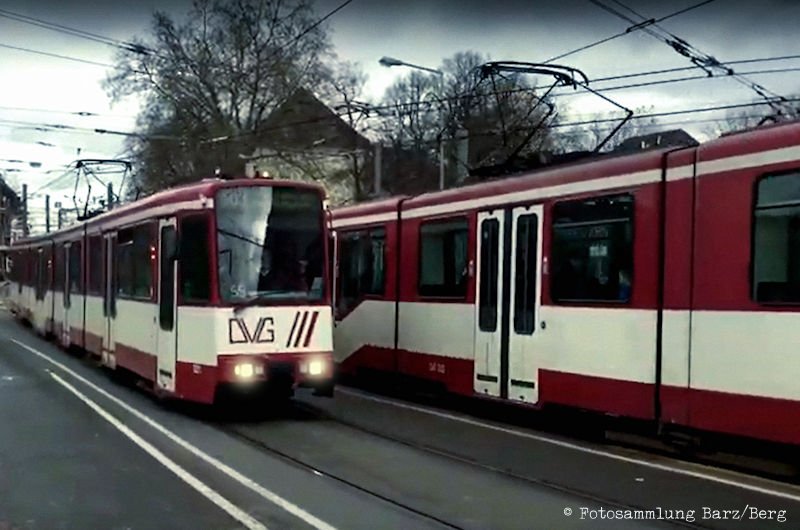
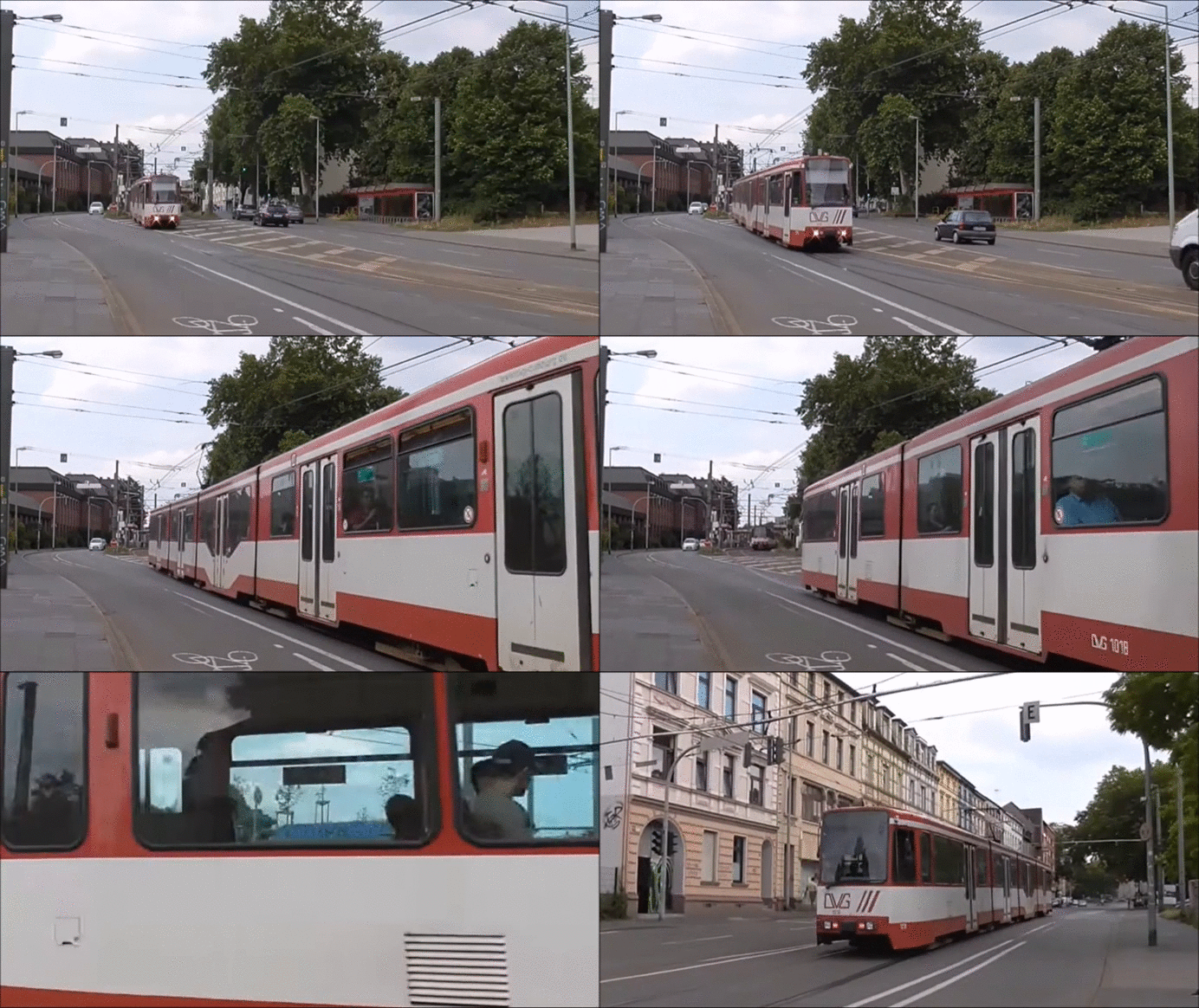
When the new underground tram tunnels in Duisburg entered service on 11 July 1992, only vehicles capable of operating in tunnel conditions could continue to run. Converting the existing fleet to left-hand boarding and LZB (train control) would not have been economically viable, so the entire fleet was replaced.Because the maximum vehicle width could not exceed 2.20 m, the common N8 type was unsuitable. A new vehicle was therefore designed specifically for Duisburg: the GT 8 NC-DU, later expanded to the GT 10 NC-DU. It met all tunnel requirements and offered a lower floor height (780 mm instead of 880 mm on the N8) and a comparatively low weight of 29 t, despite its steel construction.
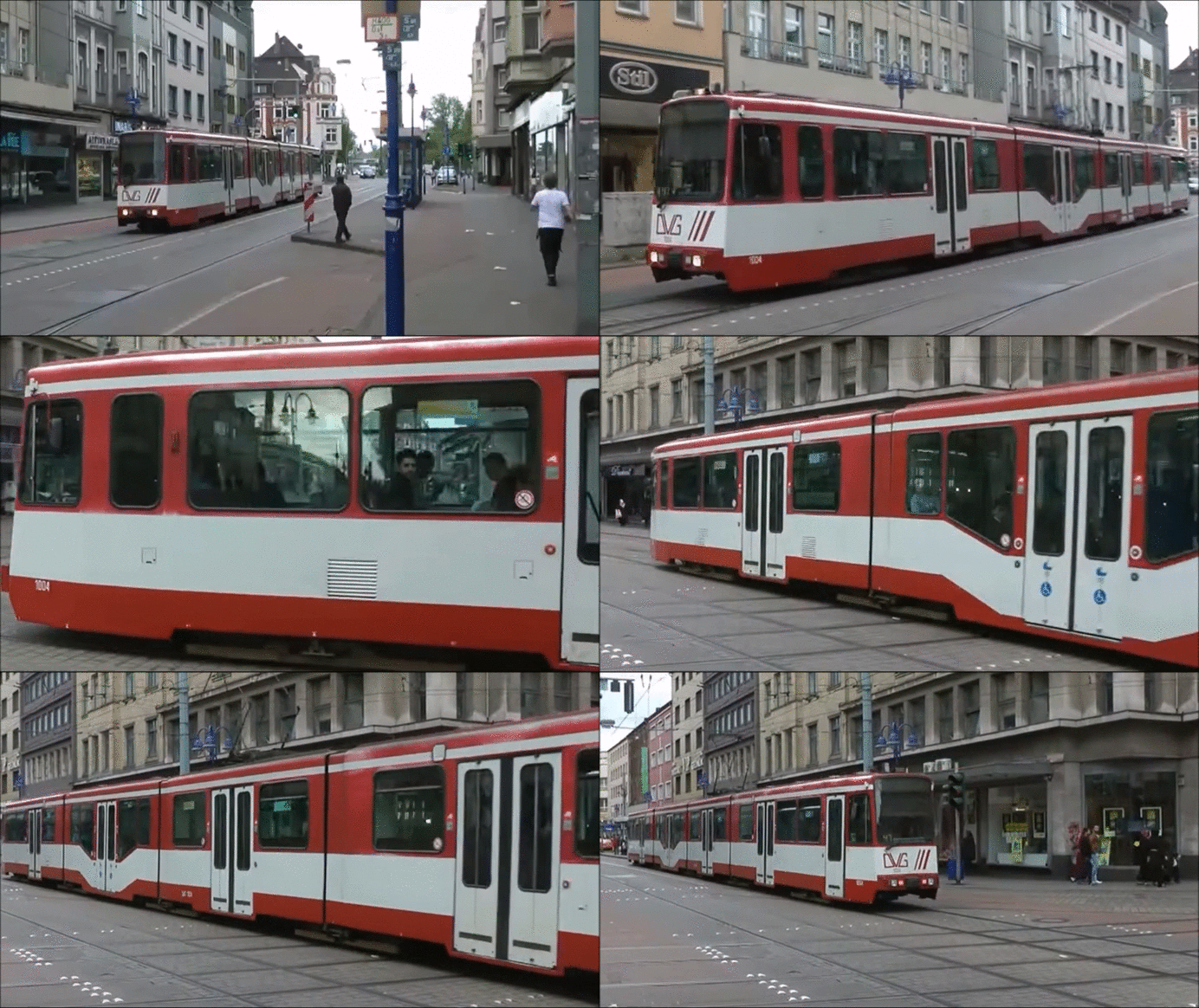
The low-floor D-section with a floor height of 280 mm was added behind the A-section in 1997/2002.
Carbody and Interior
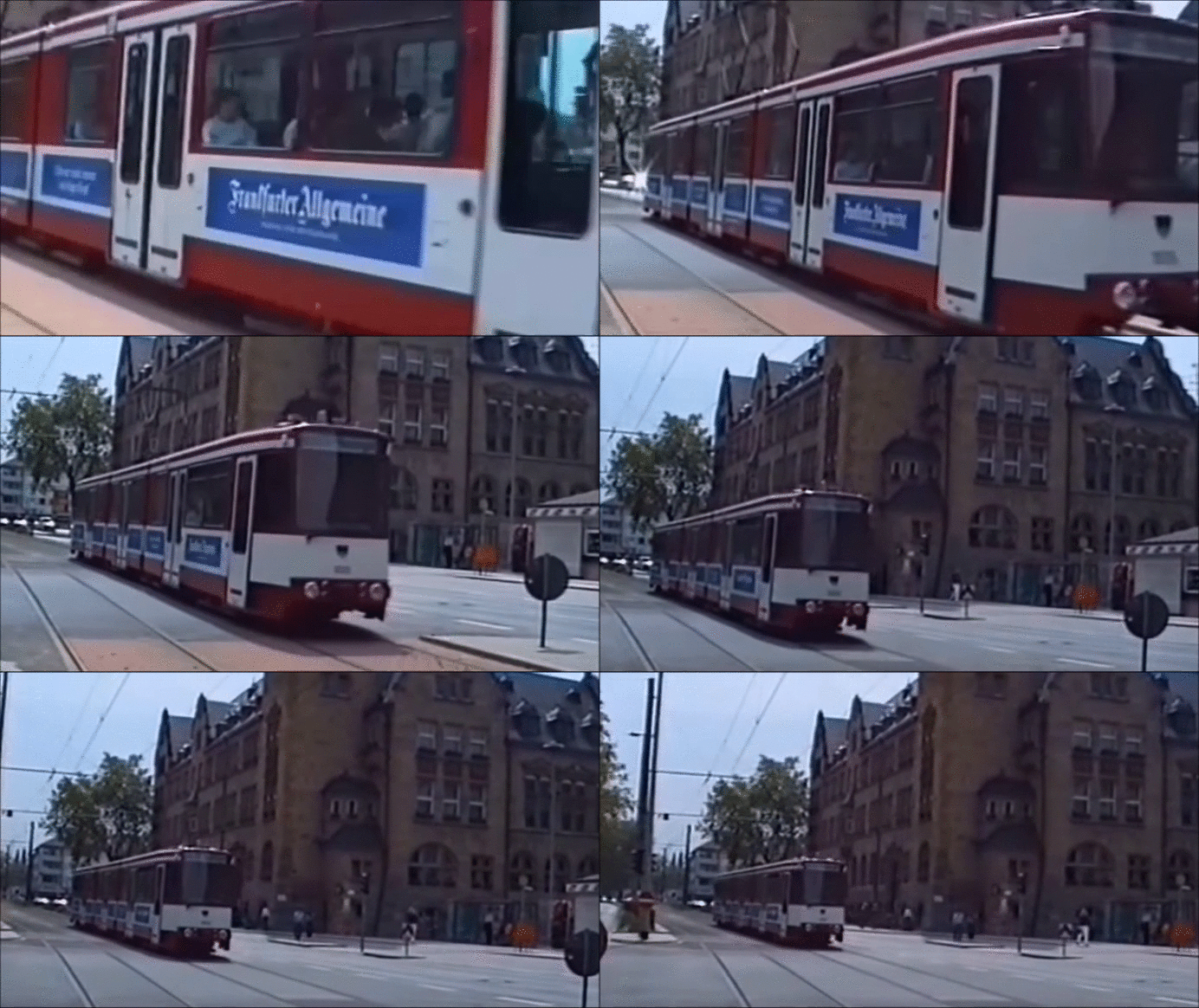
The most striking difference compared to typical tramcars is the front end, which closely resembles a B-car of the Ruhr region's Stadtbahn (e.g., U 79). The front (A-section) and rear (B-section) are identical in design.The tram is equipped with four double DÜWAG folding doors on each side and a single folding door at the front right; there is no rear door. Special bogies from Waggonunion Siegen enabled the lower floor height of the added D-section. Passengers only need to climb two steps between the high-floor and low-floor areas.
The driver's cab is separated from the passenger compartment by a partition wall. The cab door contains a fare box and a sliding window.
Originally, the trams were delivered with burgundy-colored padded faux-leather seats; from car 1025 onward, red plastic shell seats were used. The low-floor D-sections received vandal-resistant, flame-retardant fabric-covered shell seats. Over time, several cars were fully refitted with these seats, gradually replacing the older red plastic shells.
Car 1045 was the first to receive matrix displays and stop indicators in both the high-floor and low-floor sections, replacing traditional rollsigns.
Further modifications included:
- replacement of round headlights with square halogen units
- replacement of round rear/brake-light lenses with square LED modules
- planned replacement of the roof-mounted white lamp with an LED unit
Technical Specifications
The tram has a wheel arrangement of B'2'2'2'B', a length of 32.64 m, a width of 2.20 m, and a weight of 35.4 t.It offers 62 seats.
The traction motors deliver 2 x 185 kW at 750 V DC. Both series-wound motors are located in the outer bogies.
Braking Systems
- Generator brake - acts only when the vehicle is moving; traction motors operate as generators, feeding energy back into the overhead line; wear-free
- Electromechanical spring-applied brake - serves as parking brake and supplementary brake
- Magnetic track brake - electromagnets drop onto the rail to increase braking force
- Pneumatic brake - provides the strongest braking force; released pneumatically at departure
Operational Experience and Condition
The GT 10 NC-DU has proven extremely robust in service. Even the rough treatment endured by cars 1001–1003 during their temporary use in Amsterdam caused little damage - only the seat upholstery had to be replaced.However, after 30 years of operation, significant corrosion issues have appeared. Combined with insufficient accessibility and the end of their economic service life, the vehicles are being gradually withdrawn and scrapped.
The DVG does not plan to preserve a GT 10 NC-DU as a historical museum tram.
Successor Vehicle: DVG NF4 (GT 8 ND)
As a modern replacement, the NF4 (internal designation: GT 8 ND) was introduced.It is a three-section, eight-axle low-floor articulated tram, designed for bidirectional operation, with a wheel arrangement of Bo'2'2'Bo'.
At 34 m, it is around 4 m longer than the visually similar NF4 units of the neighboring Ruhrbahn.
The DVG originally ordered 47 vehicles, but the order was expanded several times. The fleet now consists of 56 units (numbered from 2001 onward).
Thus, after more than three decades, a defining chapter in Duisburg's tramway history comes to an end, and a vehicle type that shaped the city's streetscape for so long finally retires from service.
References:
- Martin Pabst: "Straßenbahn-Fahrzeuge. Band 2: Niederflur- und Stadtbahnwagen", GeraMond Verlag, München, 2000/1998
- https://www.dvg-duisburg.de
© Michaela Barz-Berg
Return to website "steam locomotives and trams in the Ruhr area"
⚒ Glückauf! ⚒
Michaela Barz-Berg, 05.2002 - 2026